 Tours out of Ho Chi Minh City and across Vietnam
Laos
Karst country, grown up
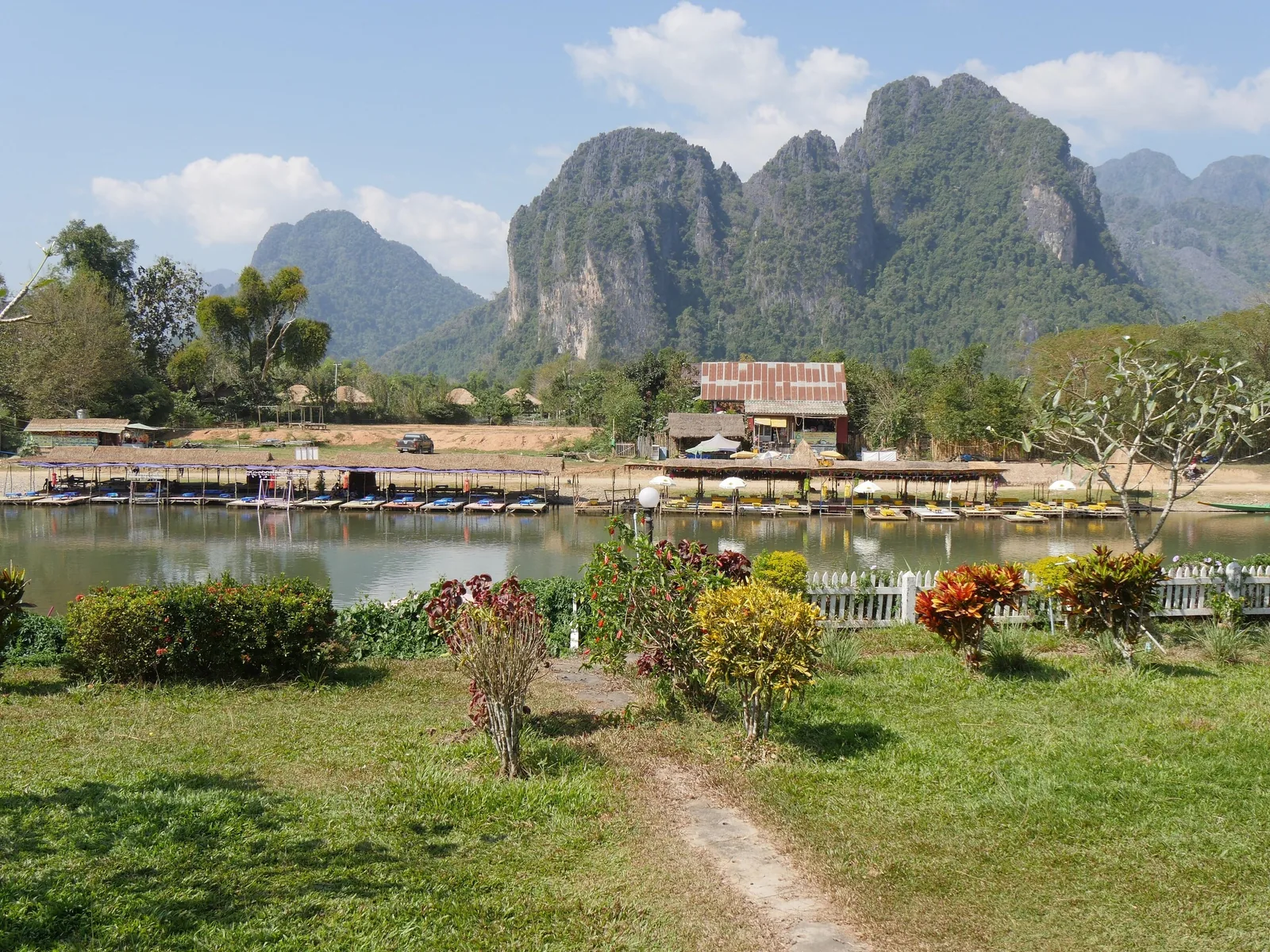
The backpacker party town of fifteen years ago has mostly gone. What is left is the reason people came in the first place: limestone mountains, a river, caves, and some of the best outdoor days in Laos.
Orientation
What Vang Vieng is
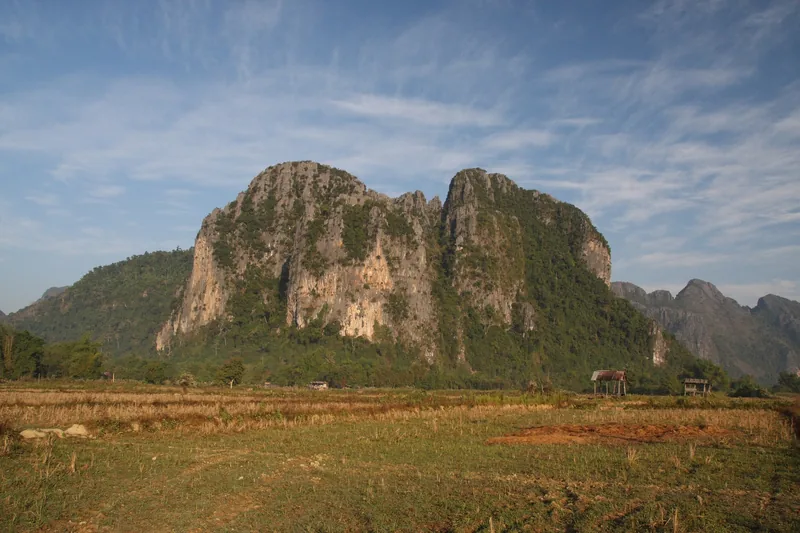
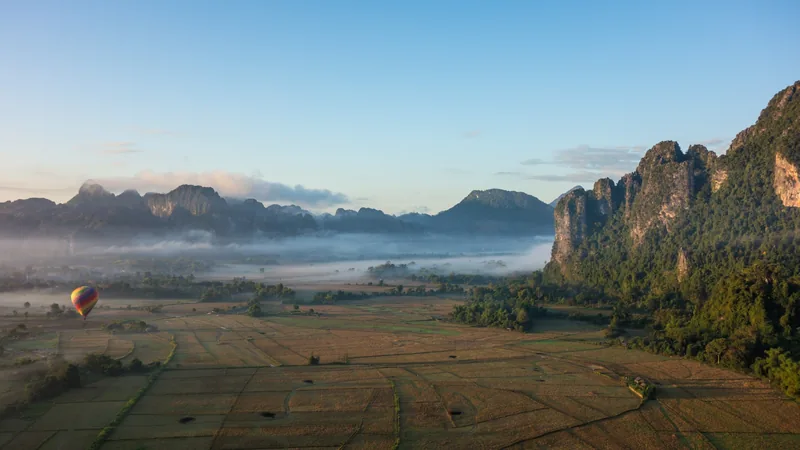
Vang Vieng sits on the Nam Song river, in a valley of jagged limestone peaks that rise straight out of the rice fields. The scenery is the equal of anything in the region. For a decade from the early 2000s, the town was known mainly for tubing down the river between riverside bars, which ended in a crackdown after a series of deaths around 2012.
It has since grown up. The bars on the river are largely gone, the town has filled with guesthouses, cafés and outdoor operators, and Korean and Chinese visitors now outnumber the backpackers. It is not a pretty town, and parts of the centre are scruffy; the reason to stay is the landscape a few minutes outside it.
- Nights
- 1 to 2
- From Luang Prabang
- About 1 hour by train
- From Vientiane
- About 1 hour by train
- Best months
- November to February
- Best for
- Kayaking, caves, cycling, views
What to do
What is worth your time
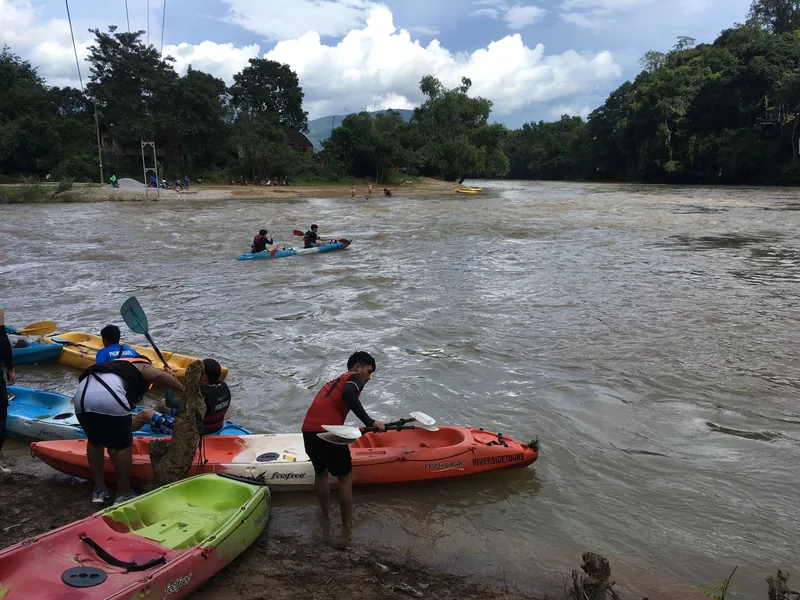
- Kayaking the Nam Song — a half-day paddle down a gentle stretch of river with the peaks all around. In the dry season it is easy; in the wet the current is faster and guides matter.
- The lagoons west of the river — clear blue pools at the foot of the cliffs, several of them now numbered and developed. The first one is busy; the further ones are quieter and have caves beside them.
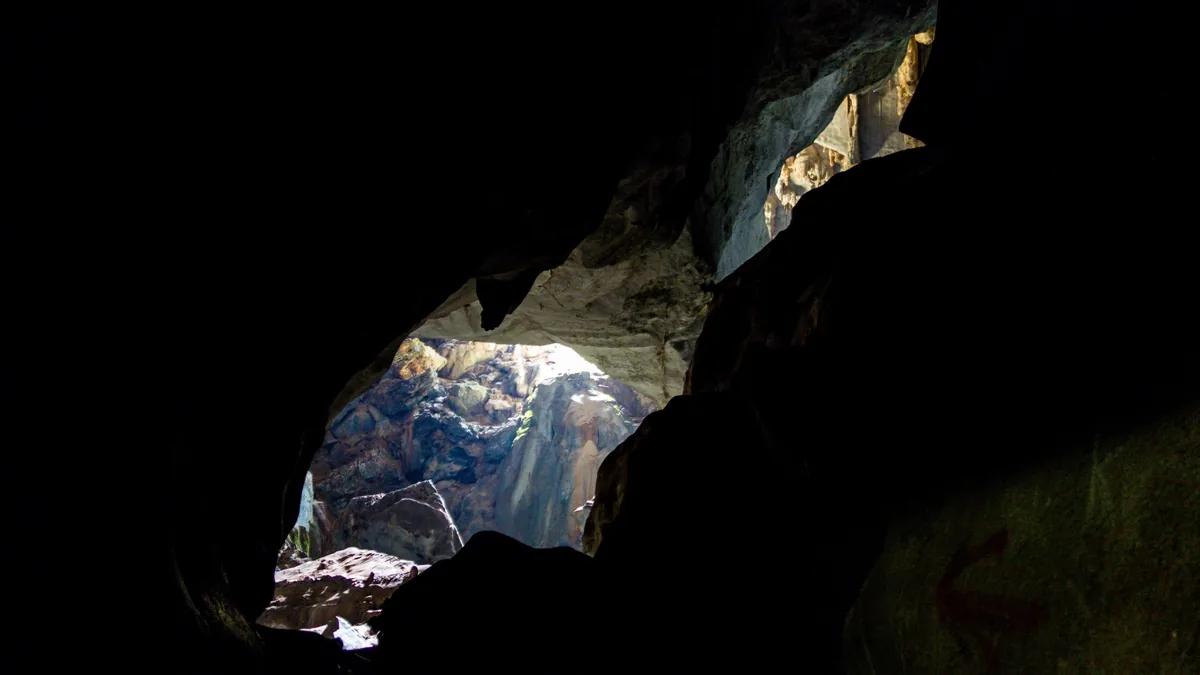
- Tham Chang and the other caves around the valley. Some are lit and easy, some need a headtorch and a guide.
- Cycling or a motorbike ride along the valley roads to the villages, the rice fields and the viewpoints.
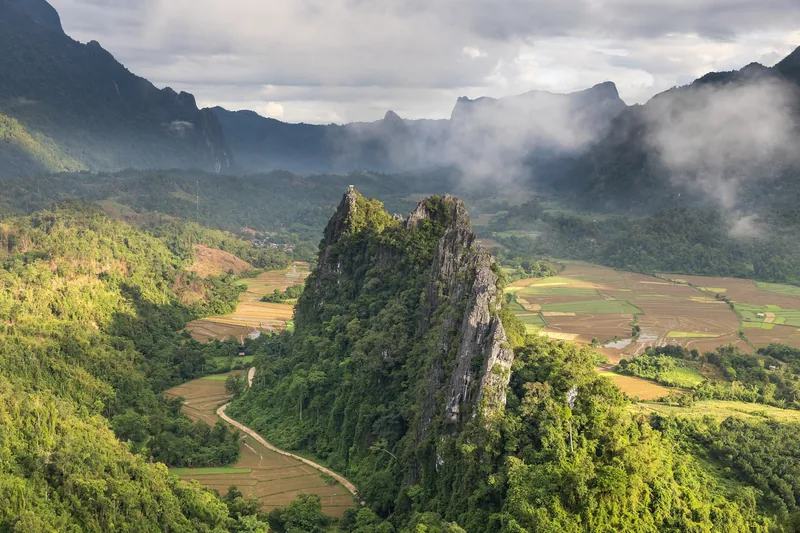
- A viewpoint hike at the end of the day — a short, steep climb with the whole valley spread out below.
- A hot-air balloon at dawn or dusk if you want the view from the air; they run in the dry season.
Advice
The things visitors get wrong
Practical
Getting here and moving on
The railway has made Vang Vieng much easier to reach. The fast train takes about an hour from Vientiane and about an hour from Luang Prabang, which makes it a natural stop between the two; the station is a few kilometres from the centre, and tickets sell out in busy months, so book ahead with your passport. By road, the expressway from Vientiane has cut that drive to roughly an hour and a half. The old mountain road north to Luang Prabang is spectacular and slow.
The nearest international airport is Wattay in Vientiane. For the visa, the usual Laos rule applies: e-visa and visa on arrival are valid at different entry points, so we check your route against your passport before booking.
| Route | Time | Note |
|---|---|---|
| Vientiane by train | About 1h | Easiest link |
| Vientiane by expressway | About 1.5h | Door to door by car |
| Luang Prabang by train | About 1h | Book ahead in the dry season |
| Luang Prabang by old road | Most of a day | Mountain scenery, slow |
Timing
When to come
November to February is the best time, dry and clear, with cool mornings and mist sitting among the peaks. March and April are hot and hazy from burning, which flattens the views. May to October is the wet season: the river is higher and faster, the fields bright green, and some caves and trails may close after heavy rain. Kayaking is gentlest in the dry months.
3 ideal · 2 workable · 1 difficult. March and April are hazy; the rivers run high from July to September.
Not for everyone
Who should skip it
If you do not want to be active, Vang Vieng has little else to offer; there is no old town and no great temple. If you are coming for the party of its reputation, you will be disappointed. It is worth one or two nights for people who like the outdoors and want to break the train journey, and it is a good stop for families with older children who enjoy caves and kayaks.
Common questions
Questions travellers ask most
Is Vang Vieng still a party town?
Much less than it was. The river bars were closed down after 2012, and today it is mainly an outdoor destination.
How many nights in Vang Vieng?
One or two. One gives you a kayak and a lagoon; two lets you add caves, a viewpoint and a morning without rushing.
How do I get there from Luang Prabang?
The train takes about an hour. Book ahead in busy months and bring your passport.
Is it good for families?
Yes, for families with children old enough to kayak and walk. Choose accommodation outside the centre for a quieter night.
Related
Read next
Laos
Laos
Luang Prabang, Vientiane and the southern Mekong.
View this journey
Laos
Luang Prabang
Temples, the river and the slowest town in the region.
View this journey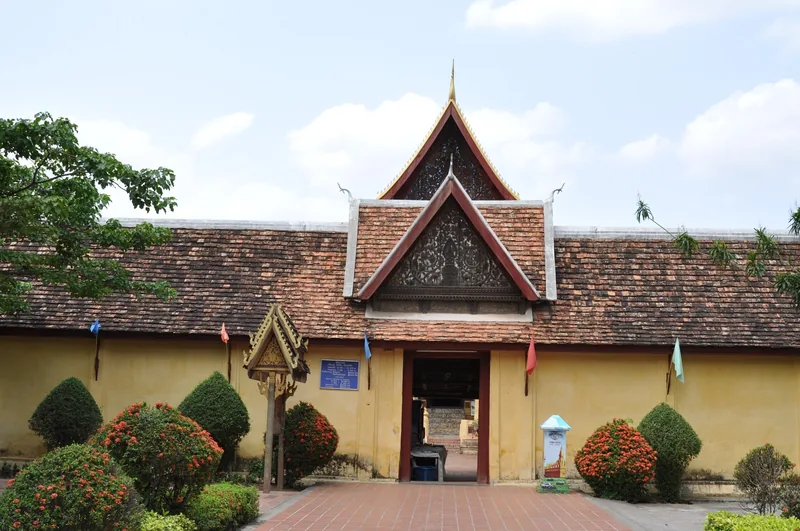
Laos
Vientiane
The small capital on the Mekong, and the train north.
View this journey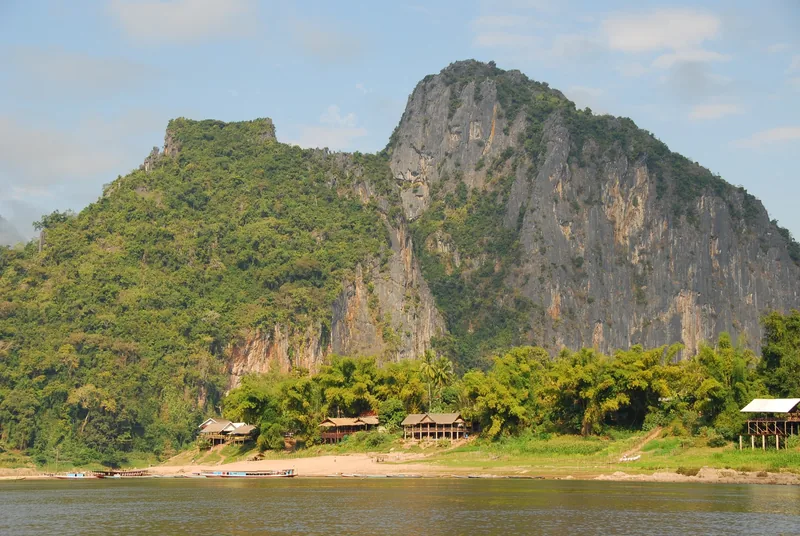
Example journey
The grand Indochina route
Laos, the length of Vietnam, the river border and Angkor in 24 days.
View this journey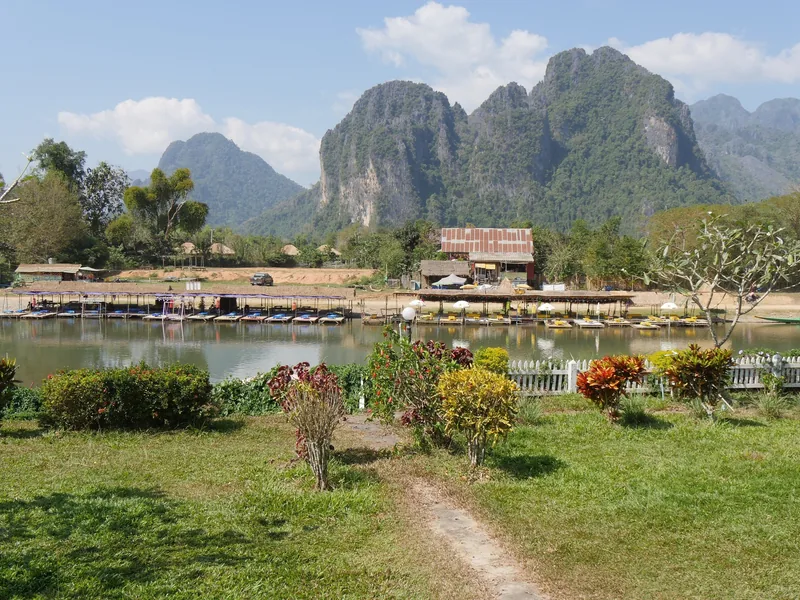
Start planning
Tell us about the trip you have in mind
Dates, party size and the places you care about are enough to start. You get a draft route and an indicative price, not a brochure.
Or talk to us:+84 766 045 399