 Tours out of Ho Chi Minh City and across Vietnam
Northern Vietnam
Ban Gioc waterfall, the cave, and the empty roads between
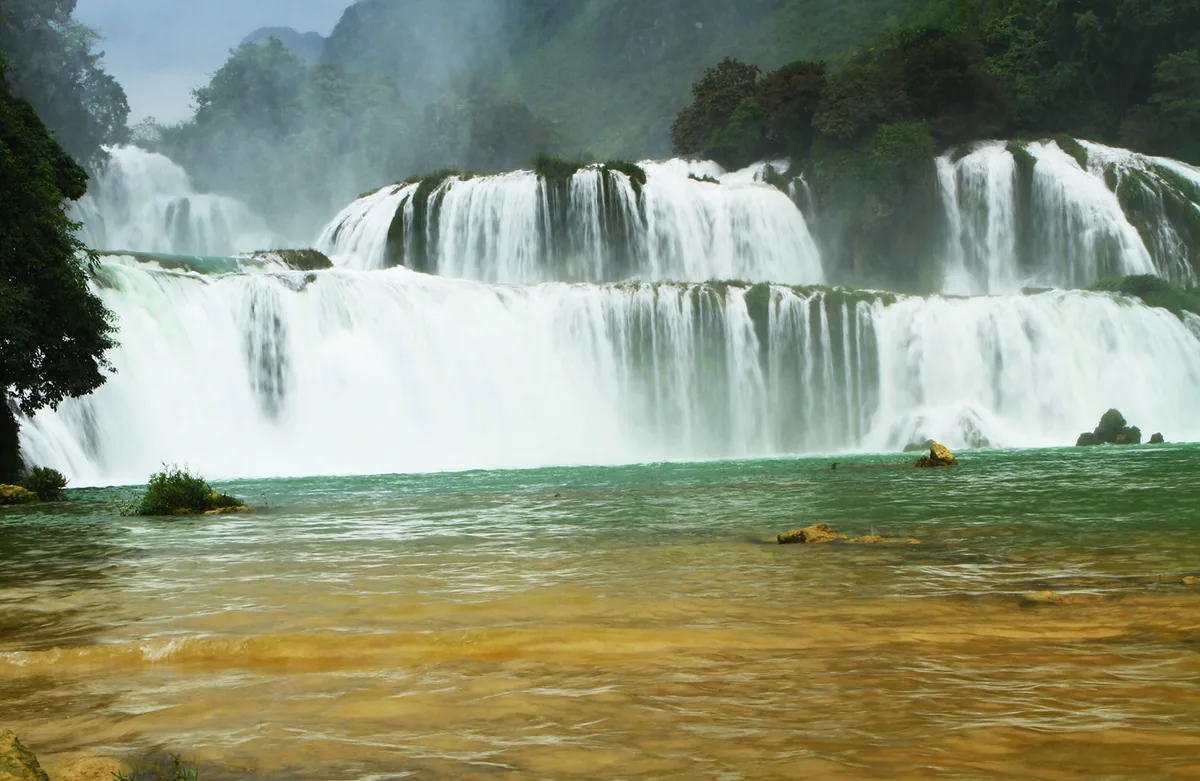
The widest waterfall in Vietnam, on the river that marks the Chinese border, reached by roads that carry almost nothing but local traffic. Three days, and two of them are long drives.
Overview
The far north-east, plainly timed
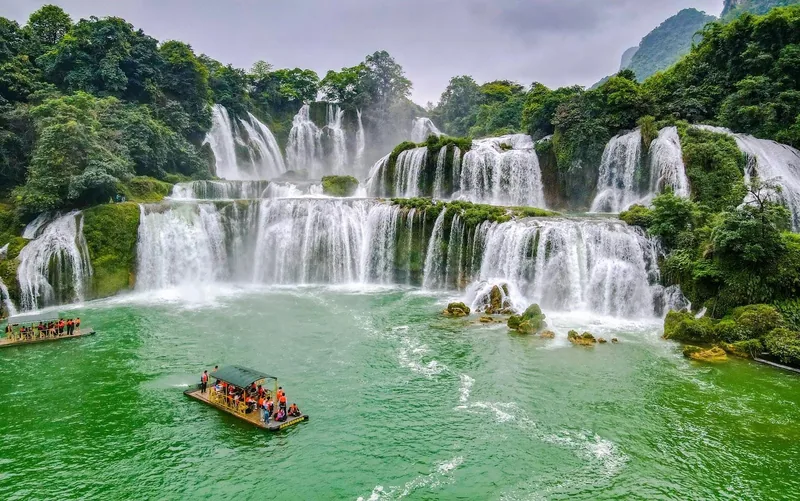
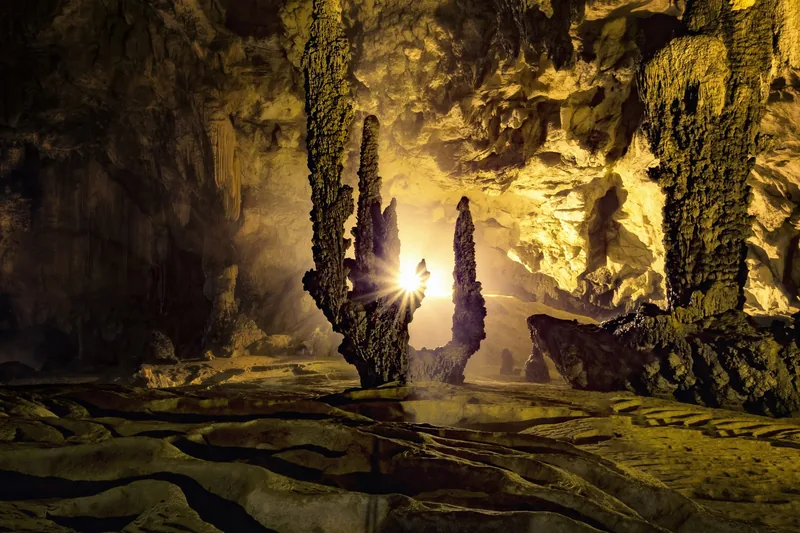
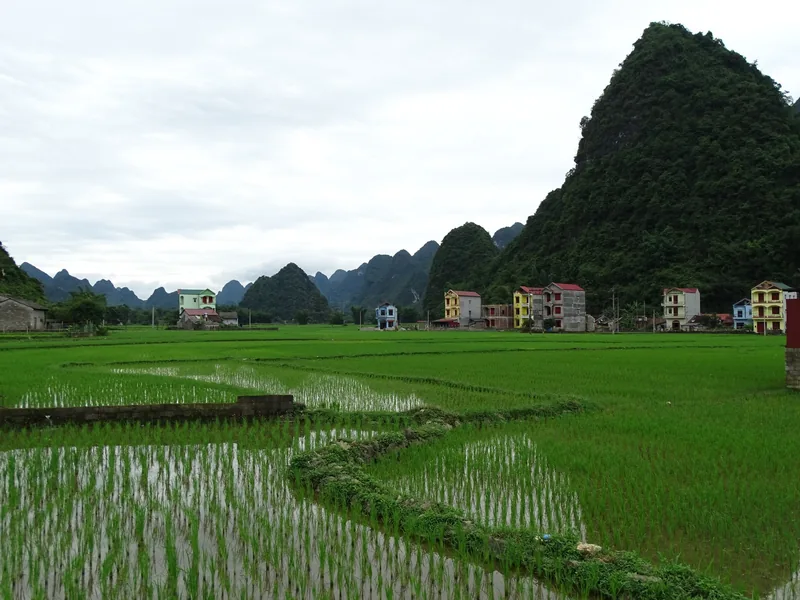
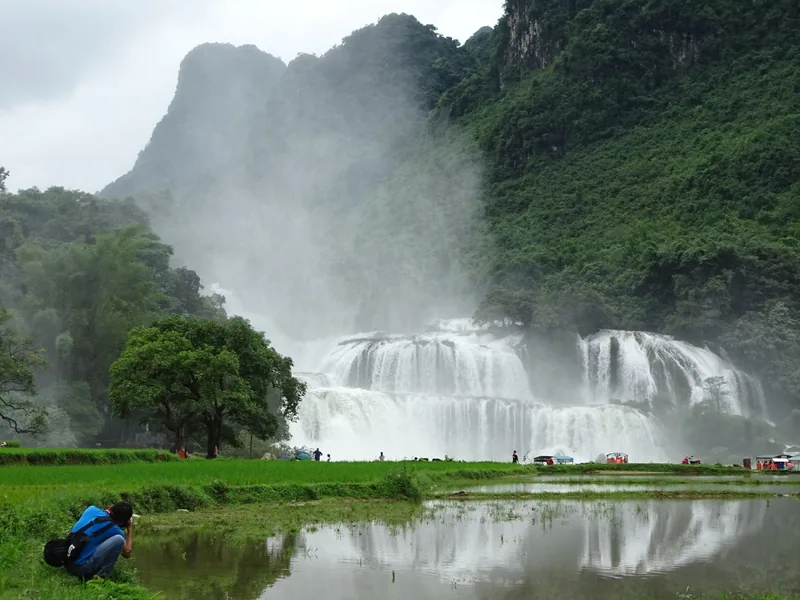
Cao Bang sits against the Chinese border in the far north-east, in karst country of green cones and river valleys farmed by Tay and Nung families. Its best-known sight is Ban Gioc, a broad, tiered waterfall on the Quay Son river, which forms the border at that point. Ten minutes away is Nguom Ngao, a cave with about a kilometre of walkable, well-lit passage and far fewer visitors than the caves of central Vietnam.
We will be straight about the shape of this trip: Cao Bang city is six to seven hours from Hanoi, and the falls are about two hours further. Three days works, but the last day is a long drive home, and four days is the version we would choose. The car, driver and guide come from our Hanoi partner operator of many years, whose drivers know these roads in the wet season.
- Length
- 3 days, 2 nights
- From Hanoi
- 6 to 7 hours to Cao Bang city
- To the falls
- About 2 hours beyond the city
- Best water
- August to October
- Traffic
- Very little
- Run by
- Our Hanoi partner operator
Nights
Where you sleep
Day by day
Day by day
Day 1
Hanoi to Cao Bang
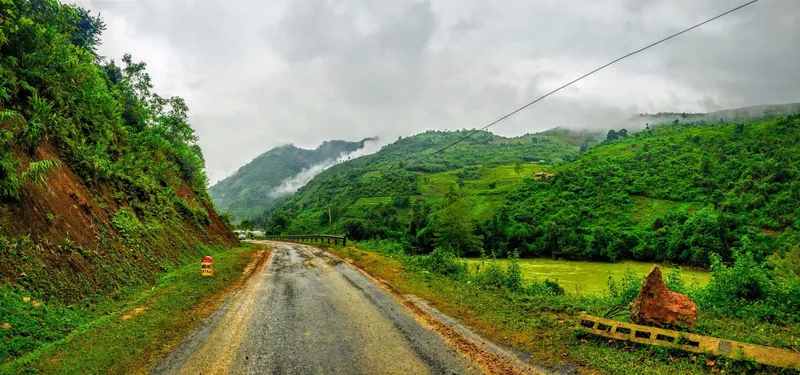
We leave Hanoi at 07:00. The first half is expressway north through Thai Nguyen; the second half climbs into the hills through Bac Kan and becomes a proper mountain road. With a lunch stop and a couple of pauses for the views, you reach Cao Bang city at around 15:00.
The rest of the afternoon is short and optional: a walk by the river in the city, or a drive out to a nearby Tay village. Dinner in town.
Day 2
Over the Ma Phuc pass to Ban Gioc and the cave
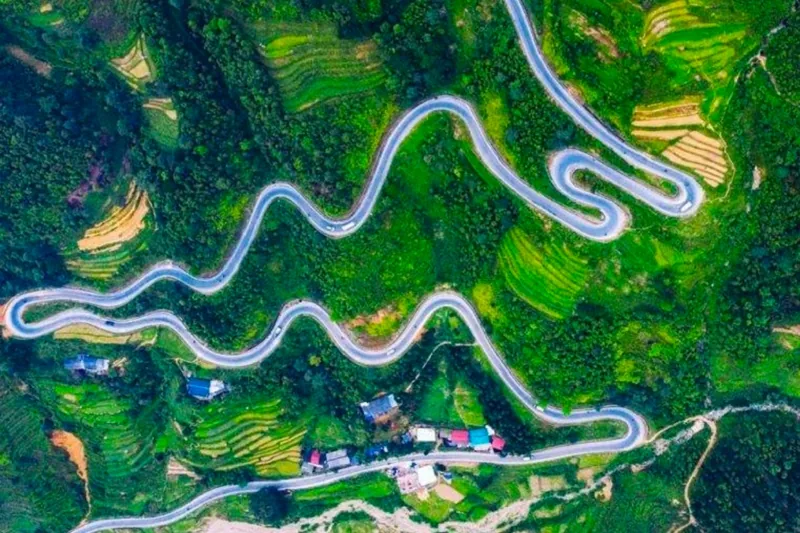
Leave at 07:30 for the two-hour drive east, which takes in the switchbacks of the Ma Phuc pass. You reach Ban Gioc mid-morning, walk the paths along the base of the falls and take a bamboo raft out towards the spray and the border line in the middle of the river.
After lunch, Nguom Ngao cave — about an hour on foot underground, on concrete paths with steps. Late afternoon is at the homestay near the falls, with time to walk the lanes of the village. Dinner with the family.
Day 3
Early light at the falls and the long road home
An optional first look at the falls at 06:30, when the mist hangs on the pool and there is nobody else there. Breakfast, then the drive back to Hanoi via Cao Bang city: eight to nine hours with stops, arriving at about 18:30.
If that sounds too long — and for many people it is — we add a night on the way back at Ba Be lake, and the trip becomes four days with two easy drives instead of one hard one.
Price
Price
| Travellers | Tier 1 — simple | Tier 2 — comfortable | Tier 3 — the good ones |
|---|---|---|---|
| 2 travelling | from 435 | from 545 | from 825 |
| 4 travelling | from 355 | from 445 | from 680 |
| 6 travelling | from 320 | from 400 | from 610 |
Most of the price in the table above is the car and driver for three long days. Adding the Ba Be night adds a fourth day of car and guide but only a modest amount per person for a group of four or six. Accommodation here is simple in every tier — the good homestays near the falls are the best there is.
Included
What is included
What the price includes
- Private car and driver for all three days
- English-speaking guide from Hanoi
- One city hotel night and one homestay night, breakfast included
- All meals from lunch on day one to lunch on day three
- Waterfall and cave entrance fees, and the raft
- Our 24/7 line
What it does not include
- Drinks and rice wine
- Travel insurance, visas and flights
- Tips for the guide and driver
- The Ba Be lake extension unless added to your quote
Practical
When the waterfall is worth it
Ban Gioc is fed by rain, so the season decides what you see. From August to October it is at full width, brown-white and loud, and the hills are green; it is the window we recommend. From about February to May the volume drops to a fraction and the rock shows through. July brings the biggest flow and also the heaviest rain, with landslides that can close the mountain road for hours. December to February is cold and misty in the hills.
The rafts go to the boundary in the middle of the river and turn back. There is no crossing for visitors. Carry your passport; there are police checks in the border zone.

Not for everyone
Who this does not suit
If more than six hours in a car on successive days makes you ill or miserable, take the four-day version or skip this one. If you only have room for one trip to the far north, Ha Giang has the more dramatic landscape. And from February to May, the waterfall in the photographs is not the waterfall you will see; we will say so if your dates fall there, and suggest the loop instead.
Common questions
Questions travellers ask most
When is the best time to see Ban Gioc waterfall?
August to October, when the rains have filled the river and the air is clearing. In spring it is much thinner.
Is three days enough?
It works, with a long last day. Four days with a night at Ba Be lake is better and the one we recommend.
Can we combine Cao Bang with Ha Giang?
Yes — our seven-day Ha Giang and Cao Bang trip runs the loop and then follows the border east to the falls.
Related
Read next
Northern Vietnam
Cao Bang
Ban Gioc, Nguom Ngao and the empty north-east.
View this journey
Northern Vietnam
Ha Giang
The loop: routes, timing, and car versus motorbike.
View this journey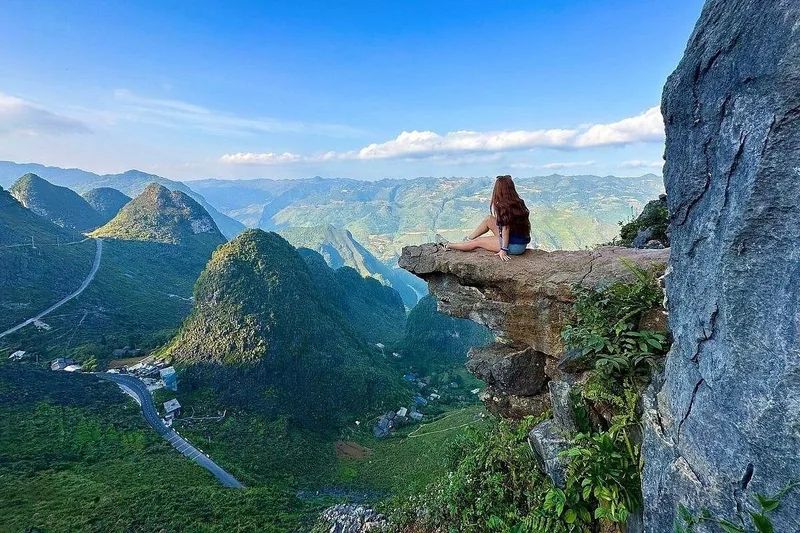
Example journey
Ha Giang and Cao Bang
The loop, the border road east and Ban Gioc falls.
View this journey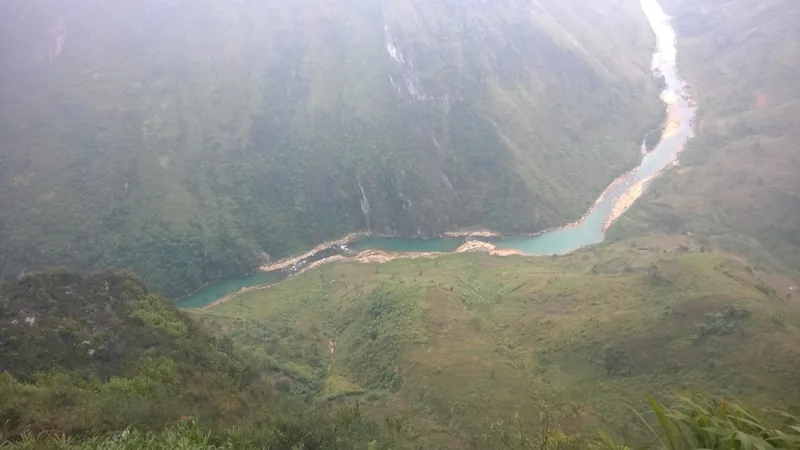
Example journey
Ha Giang loop
The full loop by car or easy rider, three nights on the plateau.
View this journey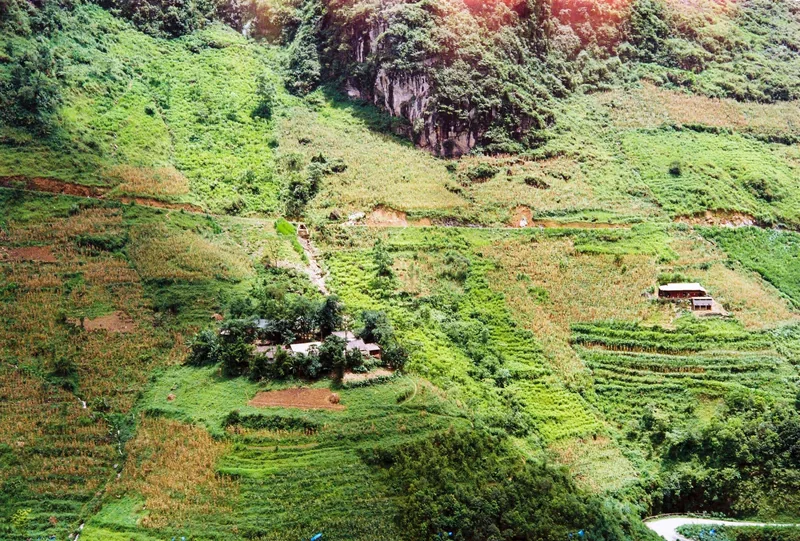
Tours
Tours
Day trips, regional routes and full-length itineraries.
View this journey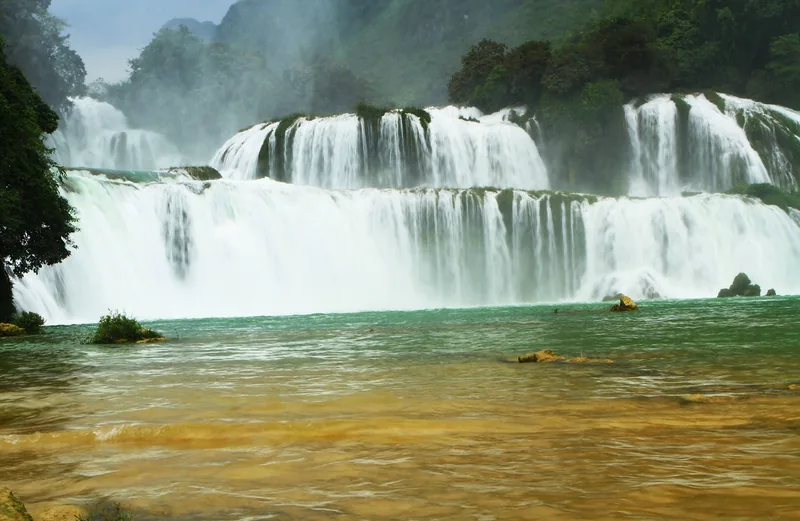
Start planning
Tell us about the trip you have in mind
Dates, party size and the places you care about are enough to start. You get a draft route and an indicative price, not a brochure.
Or talk to us:+84 766 045 399